
In recent years, aesthetic medicine has experienced remarkable growth across Pakistan. In cities like Multan, patients are now more aware, more selective, and more informed than ever before.
With so many clinics offering Botox, fillers, lasers, IV drips, and even surgical procedures, one question repeatedly arises:
Which is the best aesthetic clinic in Multan?
But perhaps the better question is:
What truly defines “the best”?
Is it popularity?
Is it pricing?
Is it social media presence?
Or is it something far more substantial?
Historically in Multan, aesthetic practice was commonly associated with facial and body whitening treatments alone. Today, aesthetic medicine encompasses a far broader spectrum, including injectables, regenerative therapies, laser technologies, and surgical integration.
This article examines what truly defines excellence in this expanding field through a structured professional debate built upon three fundamental pillars:
- Clinical Standards
- Patient-Centered Care
- Performance & Reputation
Let us examine each in depth.
Clinical Standards
The Foundation of Medical Aesthetics
Aesthetic medicine is not merely beauty enhancement. It is a medical discipline. Therefore, the first and most critical benchmark of excellence lies in clinical standards.
1. Medical Qualifications & Clinical Expertise
The first debate point:
Is the clinic medically supervised?
In aesthetic medicine, this is not a minor detail. It is the defining standard.
Unlike traditional beauty services, medical aesthetic treatments involve anatomical structures, vascular networks, neuromuscular pathways, and physiological responses. Procedures such as injectables, regenerative therapies, and energy-based skin treatments are not simply cosmetic applications. They are clinical interventions that require formal medical knowledge.
In many growing markets, aesthetic procedures are sometimes offered within salon or beauty parlour environments without direct medical supervision. While salons play an important role in grooming and cosmetic care, there is a clear distinction between beauty services and medical procedures.
Treatments involving:
- Skin penetration
- Injectable substances
- Neuromodulators
- Dermal fillers
- Platelet-based therapies
- Laser or energy-based devices
carry inherent medical risks. These may include vascular compromise, allergic reactions, infection, asymmetry, tissue damage, or delayed inflammatory responses.
The critical question is not whether complications are common. It is whether the provider is trained to recognize and manage them immediately if they occur.
A medically supervised clinic operates differently. It functions with:
- Documented patient history protocols
- Informed consent standards
- Sterile injection techniques
- Evidence-based dosing guidelines
- Emergency preparedness measures
- Structured complication management pathways
Medical supervision ensures that the practitioner understands not only how to perform a procedure, but when not to perform it. Patient selection, contraindication screening, and ethical refusal of unsuitable treatments are hallmarks of responsible aesthetic practice.
The presence of a qualified medical professional is not about prestige. It is about accountability, safety, and clinical responsibility.
In the debate about the best aesthetic clinic in Multan, medical supervision is not a marketing advantage. It is the baseline standard upon which all other qualities are built.
Without it, no level of technology, interior design, or promotional visibility can substitute for true clinical competence.
2. Clinical Safety, Sterilization & Emergency Preparedness
In elective aesthetic medicine, safety must never be secondary to aesthetics.
Patients often focus on visible outcomes, smoother skin, lifted contours, improved symmetry. However, the invisible systems behind the treatment room are what truly define a professional clinic.
A medically structured aesthetic practice operates with layered safety protocols that protect patients before, during, and after a procedure.
Sterilization & Infection Control
Any treatment involving injections, microneedling, PRP preparation, or energy-based devices must follow strict aseptic protocols. This includes:
- Use of sterile, disposable needles and cannulas
- Proper sharps disposal systems
- Medical-grade disinfectants
- Controlled preparation areas
- Cross-contamination prevention measures
Infection risk in aesthetic medicine is preventable when proper protocols are followed. When sterilization standards are compromised, even simple procedures can lead to serious complications.
Informed Consent & Documentation
Professional clinics do not rely on verbal discussions alone.
They operate with:
- Written informed consent
- Documented treatment plans
- Clear explanation of risks and alternatives
- Medical history evaluation
- Allergy screening
This documentation is not bureaucracy. It is part of ethical medical practice. It ensures transparency, accountability, and patient understanding.
Emergency Preparedness
Although complications are uncommon in experienced hands, preparedness defines professionalism.
A properly equipped aesthetic clinic should have access to:
- Emergency medications
- Management protocols for allergic reactions
- Guidelines for vascular complications
- Immediate referral pathways if advanced care is required
The ability to recognize early warning signs, such as vascular compromise during filler procedures, can prevent long-term tissue damage. Quick, informed action is what separates trained medical professionals from unqualified operators.
In aesthetic medicine, the question is not whether complications are frequent. The question is whether the clinic is capable of managing them decisively.
Structured Clinical Environment
An organized clinical layout also contributes to safety:
- Dedicated treatment rooms
- Controlled storage of medical supplies
- Proper lighting for precision procedures
- Secure pharmaceutical storage
- Clean procedural surfaces
Aesthetic medicine may enhance beauty, but it must be practiced within a medical framework.
When evaluating the best aesthetic clinic in Multan, patients should look beyond décor and marketing visibility. Clinical safety infrastructure is rarely advertised, yet it is one of the most important indicators of professionalism.
True excellence in aesthetics is not measured only by visible results. It is measured by the systems in place to protect those results.
3. Advanced Technology That Improves Outcomes
In aesthetic medicine, technology should never be adopted for trend value alone. It must serve a clinical purpose.
Modern aesthetic practice integrates multiple modalities, including injectables, regenerative therapies, and energy-based devices. However, the presence of machines alone does not define excellence. What defines excellence is the correct selection, calibration, and application of those technologies based on individual patient assessment.
Advanced tools commonly used in contemporary clinics include:
- HIFU for non-surgical tissue tightening and collagen stimulation
- Medical-grade laser systems for pigmentation correction and controlled resurfacing
- High-precision centrifugation systems for PRP therapy preparation
- Layer-specific injectable techniques using Dermal Fillers
Yet technology is only as effective as the protocol behind it.
A responsible clinic evaluates:
- Whether a device is evidence-based
- Whether it is suitable for the patient’s skin type and anatomy
- Whether the operator is properly trained in its application
- Whether the expected outcomes justify its use
Adopting new technology requires structured evaluation, training, and integration into established clinical pathways. It also requires understanding limitations. Not every patient is a candidate for every device.
Clinics that keep pace with innovation do so carefully. They analyze research, update protocols, and refine techniques to ensure that technological advancement translates into safer procedures, improved outcomes, and reduced downtime.
In the debate about the best aesthetic clinic in Multan, advanced technology should not be a marketing slogan. It should be part of a well-regulated, clinically supervised ecosystem designed to enhance patient safety and long-term results.
4. Commitment to Ongoing Education & Excellence
Aesthetic medicine evolves rapidly. Techniques, materials, safety guidelines, and international standards are continuously refined. What was considered advanced practice several years ago may no longer reflect current best practice.
For this reason, continuous education is not optional. It is a professional obligation.
Clinics committed to excellence invest in:
- Advanced workshops and hands-on clinical training
- Evidence-based updates in injectables and regenerative therapies
- Refinement of anatomical techniques
- Updated complication management strategies
- Integration of multidisciplinary knowledge
The responsibility becomes even greater when a clinic functions not only as a treatment center but also as a structured training environment. Teaching requires clarity, systemization, and adherence to standardized protocols. It demands that every technique performed is defensible, safe, and based on sound medical reasoning.
Training institutes that operate alongside active clinical practice must continuously audit their own standards. They must ensure that the methods being taught reflect current global practices rather than outdated trends.
Remaining current in aesthetic medicine requires:
- Monitoring international guidelines
- Updating product knowledge
- Refining injection depth and placement strategies
- Understanding evolving patient demographics and expectations
Commitment to education signals long-term vision. It reflects a clinic that is not static, but adaptive and forward-looking.
In evaluating excellence within Multan, patients should consider whether their chosen clinic demonstrates growth, adaptation, and professional development. A clinic that invests in education demonstrates accountability, discipline, and confidence in its standards.
In the larger debate, the best aesthetic clinic is rarely the loudest. It is often the one that quietly invests in systems, safety, technology, and knowledge year after year.
Patient-Centered Care
Beyond the Procedure
Technical expertise establishes a clinic’s credibility, but the quality of patient interaction defines its character. This category examines how individuals are respected as partners in care, not merely as consumers of procedures.
1. Thorough, Honest Consultation Process
This is often the most overlooked factor.
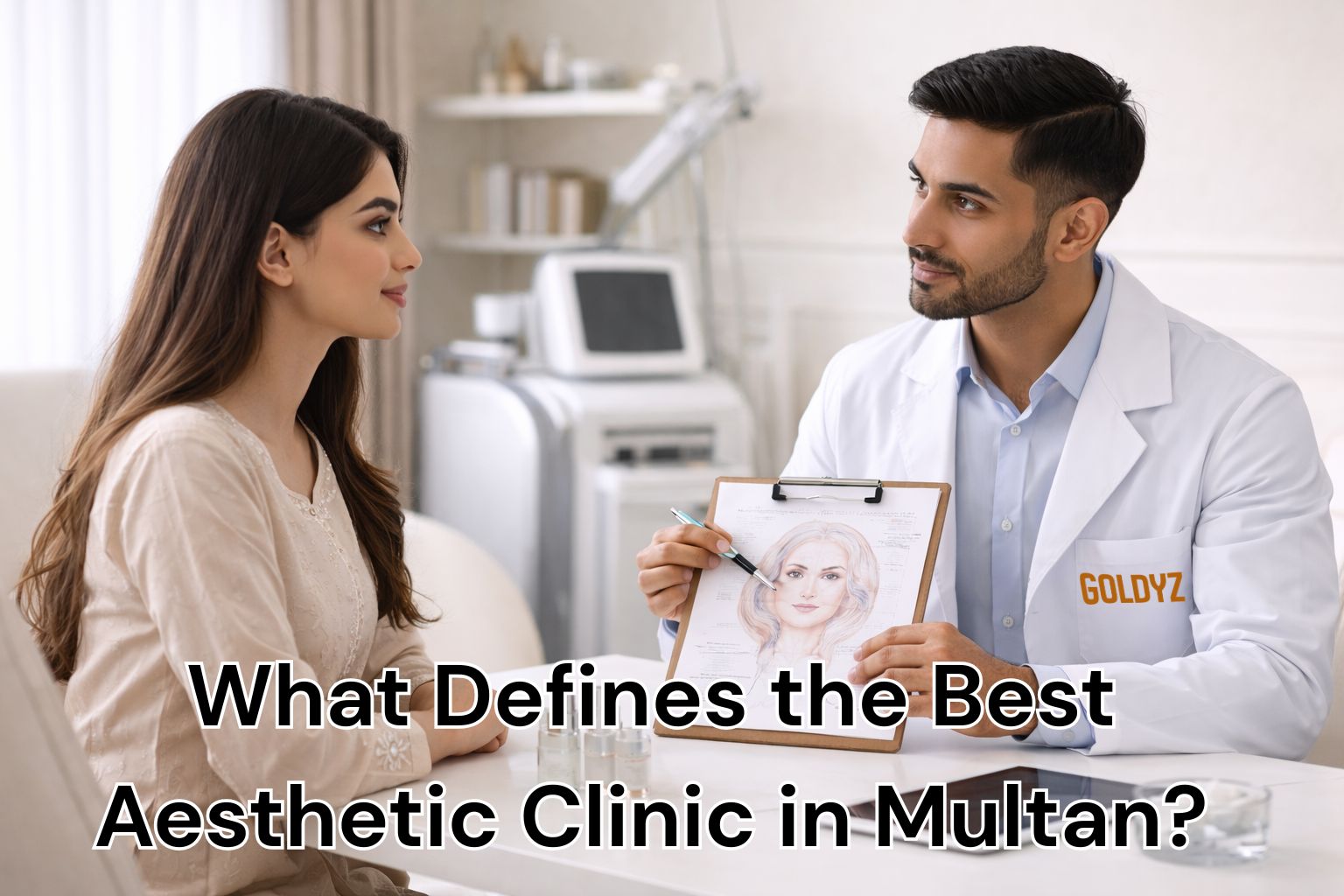
The consultation is the most clinically significant step in the aesthetic journey. It is here that medical judgment is exercised and trust is established. A genuinely patient-centered clinic maintains a clear distinction between medical guidance and commercial interest.
An authoritative consultation is characterized by:
- Diagnostic Rigor: The provider conducts a systematic evaluation including medical history, anatomical assessment, skin analysis, and candidacy screening. Listening precedes recommending.
- Truthful Discourse: The ethical practitioner possesses the confidence to decline inappropriate requests. They communicate realistic outcomes with clarity, disclosing what is achievable, what is not, and why.
- Risk Transparency: Every procedure carries inherent considerations. These are discussed openly, alongside recovery expectations and alternative approaches, allowing for genuinely informed consent.
- Educational Empowerment: Patients leave with understanding, not just a treatment plan. They comprehend the rationale behind recommendations and feel equipped to make decisions aligned with their interests.
An ethical practitioner sometimes says “no” when a requested treatment is inappropriate. Realistic outcomes, They will tell you what is not possible or suitable for you, rather than selling you everything.
This builds long-term trust rather than short-term revenue.
2. Ethical Pricing vs Discount Culture
In many cities, aesthetic treatments are marketed through aggressive discounts.
Aesthetic medicine occupies a unique space where discounted pricing often signals compromised standards. Responsible patients have learned to view aggressive promotions with legitimate concern.
But in medicine, extremely low pricing can raise serious concerns:
- Authentic Product Use: Are branded injectables being used? Is product authenticity verified?
- Protocol Adherence: Assurance that dilutions, handling, and storage follow established medical guidelines?
- Comprehensive Safety: Is patient safety compromised for cost reduction?
Premium treatments require quality products, sterile consumables, trained staff, and emergency preparedness.
Ethical pricing reflects quality standards. It is an indicator of responsibility, not profit alone.
3. Customized Treatment Planning
No two faces are identical.
Human anatomy does not conform to standardized protocols. The superior clinic rejects algorithmic approaches in favor of deliberate, customized planning.
The “best clinic” does not offer a one-size-fits-all approach. Instead, it:
- Designs individualized treatment plans
- Combines modalities when appropriate
- Plans staged procedures
- Advises maintenance timelines
For example, combining injectables with skin tightening or laser treatments can produce more harmonious outcomes than relying on a single modality.
Personalization, Anatomy-Specific Design, Strategic Modality Selection and Temporal Planning are hallmarks of advanced aesthetic practice.
4. Follow-Up & Long-Term Care
True excellence extends beyond the procedure day.
A patient-centered clinic should offer:
- Structured follow-up visits
- Touch-up evaluations when needed
- Clear post-care instructions
- Accessible communication for concerns
Aesthetic medicine is often a journey, not a single appointment.
Structured Reevaluation, Comprehensive Aftercare and Longitudinal Partnership emphasize continuity of care and demonstrate responsibility.
Performance & Reputation
Where Results Speak
The final debate category focuses on measurable outcomes and public trust.
1. Consistency of Results Across Cases
Anyone can achieve a good result once.
Excellence is demonstrated by consistency.
Key indicators include:
- Natural-looking outcomes
- Avoidance of overfilled or exaggerated features
- Harmonized facial proportions
- Balanced enhancements
Consistency reflects refined technique, controlled dosing, and disciplined aesthetic judgment.
It is one of the strongest markers of professional mastery.
2. Verified Patient Feedback & Long-Term Trust
In today’s digital era, online transparency plays a major role.
Patients evaluate clinics based on:
- Google reviews
- Authentic testimonials
- Word-of-mouth recommendations
- Longevity in the local market
Sustained positive feedback over multiple years indicates operational stability and patient satisfaction.
Short-term hype rarely translates into long-term credibility.
3. Comprehensive Aesthetic & Surgical Care Under One Roof
Another major debate point is service range.
Does the clinic offer isolated treatments, or a comprehensive aesthetic ecosystem?
A modern high-standard clinic may provide:
- Injectables
- Laser therapies
- Skin rejuvenation procedures
- IV nutritional therapy
- Minor surgical procedures
- Access to specialist surgical consultations
Integrated care allows:
- Better treatment planning
- Seamless referrals
- Controlled clinical environment
- Reduced fragmentation of care
In expanding aesthetic markets, comprehensive facilities often signal higher operational capability.
So, Which Clinic Is the Best in Multan?
After analyzing the three categories, the answer becomes clearer.
The best aesthetic clinic in Multan is not defined by slogans, follower counts, or temporary promotions.
It is defined by:
- Medical qualifications and safety standards
- Ethical consultation practices
- Advanced technology used responsibly
- Commitment to ongoing education
- Consistent natural results
- Verified patient trust
- Comprehensive service integration
In the end, “best” is not a marketing title. It is a reflection of structure, systems, discipline, and long-term credibility.
For patients seeking aesthetic treatments, the real debate should not be:
“Which clinic is cheapest?”
But rather:
“Which clinic meets the highest professional standards?”
When that question is asked carefully, the answer often becomes evident.
In Multan, some clinics have progressively aligned themselves with this structured, medically supervised framework. GoldyZ Multan Aesthetics represents one such example of this transition toward regulated, system-driven aesthetic practice.
Dr. Zeshan Ahmed
Medical Aesthetic Practitioner
Director, GoldyZ Multan Aesthetics