
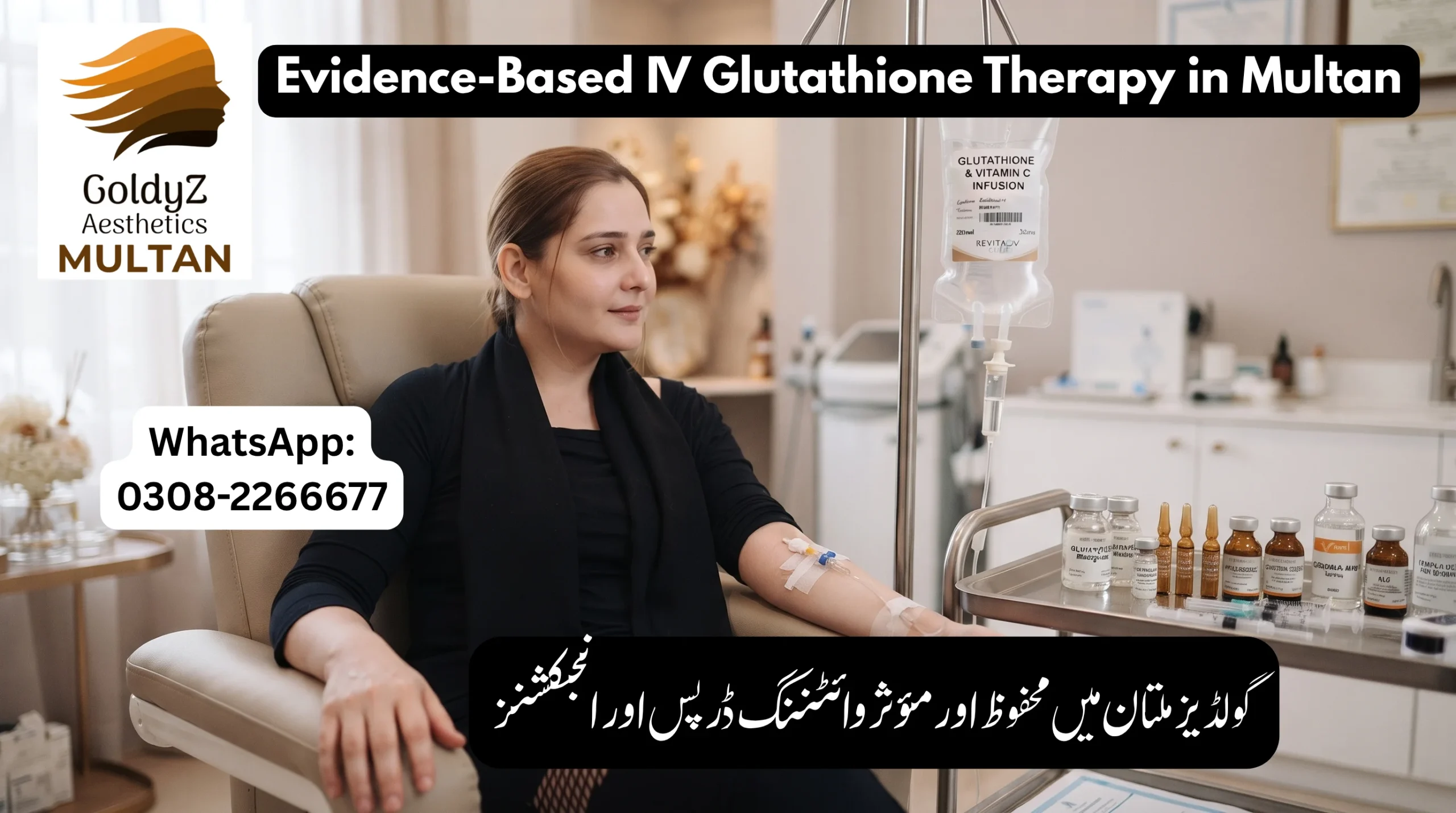

As an aesthetic physician and maxillofacial surgeon with 25 years of clinical practice, including the past five years operating GoldyZ Multan Aesthetics, I have had the opportunity to administer thousands of IV glutathione infusions. In a region like Multan, where local weather, intense heat, and high humidity place unique demands on the skin, routine textbook approaches often fall short of delivering predictable results. Over the years, our close monitoring of diverse skin types and patient responses has revealed crucial insights into product authenticity, baseline nutritional screening, age-related metabolic factors, and precise administration protocols. Below, I share my sole clinical findings, observations, and protocols developed through daily practice to help refine standards in aesthetic care.
In aesthetic medicine, practical experience often reveals nuances that go beyond standard textbook guidelines. Operating in Multan, Pakistan, and having administered thousands of IV glutathione infusions over the past five years, backed more than two decades of overall clinical experience, our practice closely monitors the physiological and clinical responses of diverse skin types under specific environmental conditions, including regional heat and humidity.
Here is a structured review of our clinical observations, protocols, and findings regarding intravenous glutathione therapy.
1. Product Authenticity and Supply Chain Integrity
The efficacy and safety of any aesthetic injectable begin with product sourcing. Over years of practice, we have observed that brand variation plays a role, but the import and supply chain channels are far more critical.
Counterfeit products present a persistent challenge in the market. To safeguard clinical outcomes, our facility established direct channels to source verified formulations from countries such as Korea, the Philippines, Switzerland, and Thailand, culminating in the formal registration of our import operations under GoldyZ Aesthetics (Pvt.) Ltd. Ensuring an uncompromised cold chain and verifiable batch origins directly correlates with predictable, adverse-event-free clinical results.
2. Baseline Metabolic and Nutritional Screening (“Gluta-Virgins”)
For patients undergoing intravenous glutathione therapy for the first time, a comprehensive baseline assessment is mandatory. Our protocol requires laboratory evaluations, including:
- Complete blood count and vitamin profiles
- Liver function tests (LFTs)
- Renal function tests (RFTs)
- Thyroid-stimulating hormone (TSH)
Any significant compromise in LFTs, RFTs, or TSH serves as a strict contraindication for the procedure. Furthermore, addressing underlying nutritional deficiencies is vital prior to or alongside glutathione administration.
Clinical Observation on Nutritional Status: Patients presenting with chronic nutritional deficiencies (often linked to socioeconomic or dietary factors) demonstrated slower or less pronounced responses to IV glutathione compared to those with optimal baseline nutrition. Consequently, correcting micronutrient status—utilizing targeted IV vitamin therapies (including vitamins A, C, E, B-complex, iron, and essential trace minerals)—frequently precedes or runs parallel to the glutathione protocol.
3. Dosage Regimens, Timelines, and Financial Transparency
Intravenous glutathione is not a rapid-fix intervention. Clinical outcomes require adherence to structured cumulative dosing:
- Indication Threshold: Visible clinical improvements generally begin to manifest between weeks 4 and 6, requiring a consistent course of 10 to 15 infusions delivered on a weekly or fortnightly schedule, depending on the individual dosage.
- Maintenance: Following the primary loading phase, maintenance or booster doses (typically single sessions) are required every three months to sustain clinical results.
- Informed Expectations: Given the extended nature of the regimen, transparent financial counseling is a standard part of our consultation process, ensuring patients understand the total scope of the treatment plan before commencement.
4. Age-Related Metabolic Variations
Patient age significantly influences treatment response. Younger adults (ages 18 to 30) generally exhibit robust and rapid responses to IV infusions. Conversely, older demographics often demonstrate a slower response rate, which we attribute to age-related declines in baseline metabolism and cumulative nutritional gaps. Even with prolonged regimens, results in older cohorts frequently require more conservative outcome expectations.
5. Expanding Therapeutic Indications Beyond Skin Lightening
While glutathione is frequently associated primarily with skin brightening, our clinical data shows exceptional efficacy in treating specific dermatological pathologies, including:
- Melasma
- Post-inflammatory hyperpigmentation (PIH)
- Uneven skin tone and compromised skin texture
Many patients initially hesitant about glutathione therapy—believing it unnecessary for their skin type—experienced significant therapeutic resolution of these stubborn pigmentation disorders, shifting their perspective entirely once clinical results became evident.
6. Protocol Optimization: The Danger of “All-in-One” Drips
A significant portion of our consultations involves patients who previously received glutathione therapy at other facilities with little to no visible effect. Investigation into their prior regimens usually reveals two critical flaws:
- Unknown Formulations: Patients were often unaware of the specific brand or dosage administered because pre-mixed solutions were brought into the treatment room. At GoldyZ, all products are opened and prepared directly in front of the patient from verifiable packaging.
- Pharmacokinetic Incompatibilities: A widespread practice involves mixing glutathione and various vitamins into a single IV bag and pushing them simultaneously.
Clinical Insight: Glutathione and certain vitamins have distinct half-lives, optimal pH requirements, and chemical interaction profiles. Simultaneous combination in a single bag can lead to oxidation, inactivation, and suboptimal delivery. To counter this, our protocol avoids single-bag mixtures, instead utilizing a sequential multi-bag infusion method (typically administering 4 to 5 separate 100 mL IV bags in a structured, step-by-step sequence). While more labor-intensive for the clinician, this preserves the chemical integrity of each active ingredient and significantly enhances clinical efficacy.
7. Safety Protocols and Management of Adverse Reactions
Intravenous therapies carry inherent risks of allergic hypersensitivity and transient hypotension. Clinical experience highlights the necessity of:
- Avoiding the omission of preliminary spot sensitivity testing.
- Moving away from the routine, unindicated prophylactic addition of steroids or heavy anti-allergies, which can mask early adverse signs or alter physiological responses.
Conclusion
Intravenous glutathione and vitamin therapy remain dynamic, evolving tools in modern aesthetic medicine. Rigorous attention to product provenance, strict laboratory screening, customized sequential infusion protocols, and transparent patient communication remain the foundation of safe, predictable, and medically sound clinical outcomes.
Schedule Your Consultation Today
If you are looking for safe, evidence-based, and medically supervised whitening drips and injections therapy in Multan, our experienced team at GoldyZ Multan Aesthetics is here to help. We prioritize thorough baseline evaluations and tailored protocols to ensure optimal clinical outcomes for your skin.
Ready to start your customized skin health journey? Click the WhatsApp (0308-2266677) icon on your screen to connect directly with our clinic team for appointments and inquiries.
Medical Disclaimer: The clinical insights, observations, and treatment descriptions shared in this article are based on the personal practice experience and professional protocols of Dr. Zeshan Ahmed at GoldyZ Multan Aesthetics. This content is for informational and educational purposes only and should not be construed as formal medical advice or a substitute for a professional clinical consultation, diagnosis, and individualized laboratory evaluation. Results from IV therapy may vary based on individual physiological and metabolic factors.