
Clinical Mechanisms, Environmental Triggers, and Pharmacy Brand Protocols
• Medically Reviewed Acne Treatment in Multan
1. Pathophysiology: What Actually Happens in Adult Skin?
Acne vulgaris is not merely surface dirt or poor hygiene. It is a chronic inflammatory disorder of the pilosebaceous unit (the hair follicle paired with its adjacent sebaceous gland). At the microscopic level, every inflammatory breakout is governed by four interwoven biological events:
The Four Hallmarks of Acne Genesis:
- Abnormal Follicular Keratinization: Epithelial cells shedding inside the follicle canal become abnormally cohesive (“sticky”), failing to desquamate properly and creating an invisible plug called a microcomedone.
- Sebaceous Hyperplasia & Excess Sebum Production: Under androgenic stimulation (DHT and testosterone), sebocytes multiply and hyper-secrete sebum rich in squalene and wax esters.
- Microbial Proliferation: Cutibacterium acnes (formerly Propionibacterium acnes), an anaerobic bacterium residing within the sebum, proliferates rapidly inside the oxygen-deprived plugged follicle.
- Inflammatory Cascades: C. acnes hydrolyzes sebum triglycerides into free fatty acids and releases pro-inflammatory mediators (TLR-2 activation, interleukin-1α, TNF-α), drawing neutrophils and inducing papules, pustules, or painful cysts.
2. Adult Acne vs. Teenage Acne: The U-Zone vs. T-Zone Paradox
Many adults in Pakistan reach their late 20s or 30s bewildered by sudden eruptive lesions despite having clear skin as teenagers. Adult acne exhibits distinct characteristics:
| Parameter | Adolescent Acne | Adult Acne (≥ 25 Years) |
|---|---|---|
| Primary Distribution | T-Zone (Forehead, Nose, Central Cheeks) | U-Zone (Jawline, Mandibular line, Chin, Neck) |
| Lesion Type | Open/closed comedones, superficial pustules | Deep, tender, persistent nodules and cysts |
| Skin Barrier Status | Robust, highly oily, resilient | Dehydrated, impaired barrier, easily irritated |
| Healing & Hyperpigmentation | Rapid turnover; PIH resolves quickly | Slow epidermal turnover; persistent, dark PIH |
Adult skin cannot tolerate harsh, stripping teenage astringents. Aggressive washing breaches the stratum corneum, allowing environmental toxins to penetrate and exacerbate inflammation.
3. Environmental & Lifestyle Triggers Specific to Pakistan
Standard Western skincare advice often fails in Pakistan because it ignores the unique meteorological, chemical, and cultural factors present in cities like Karachi, Lahore, Faisalabad, and Islamabad. This article is written specifically in relation to Acne treatment in Multan
A. Extreme Climatic Swings
- Monsoon Humidity (Multan, Punjab plains): Relative humidity over 80% creates a tropical incubator on facial skin. Sweat combined with sebum and dead cells encourages both C. acnes and Malassezia (fungal acne/folliculitis).
- Dry Winter & Severe Smog (Multan, Lahore, Gujranwala, Faisalabad): Ambient particulate matter (PM2.5 and PM10) binds to squalene on the face, inducing squalene peroxidation, a potent driver of pore inflammation and microcomedones. The indoor gas heaters and dry cold air strip skin moisture, weakening the lipid barrier.
B. Water Hardness (Heavy Mineral Content)
Borehole and municipal tap water across much of urban Multan has high concentrations of calcium and magnesium salts (Total Dissolved Solids often exceed 400–700 ppm). Hard water neutralizes natural skin lipids, raises skin pH above its natural acidic state (4.5–5.5), and leaves behind mineral film that irritates active lesions.
C. The Desi High-Glycemic Dietary Matrix
Traditional Pakistani diets are rich in refined carbohydrates: parathas, refined white flour (naan, roti), sugary chai, and fried savories (samosas, pakoras). High glycemic meals trigger sudden spikes in serum insulin and Insulin-Like Growth Factor 1 (IGF-1). Elevated IGF-1 directly stimulates Sterol Regulatory Element-Binding Protein-1c (SREBP-1c), ramping up glandular sebum output and follicular hyperkeratosis.
4. Lesion Morphology: Accurately Identifying What You Have
Effective treatment requires knowing which specific lesions are on your skin. A common error is treating deep cystic bumps with drying washes meant for blackheads.
Non-Inflammatory: Comedones
Closed Comedones (Whiteheads): Flesh-colored bumps under closed skin; trapped keratin and sebum.
Open Comedones (Blackheads): Follicular pore is open; melanin and sebum oxidize upon air exposure, turning dark.
Inflammatory: Papules & Pustules
Papules: Firm, tender, red elevations without a visible pus head.
Pustules: Circumscribed elevations containing white/yellow purulent exudate (dead leukocytes and bacteria).
Deep Nodular / Cystic
Extensive follicular wall rupture beneath the dermis. Large, agonizingly painful, indurated lesions spanning multiple millimeters. Highest risk for permanent boxcar or icepick scarring.
5. Topical Actives & Available Pakistani Pharmacy Brands
International skincare videos often recommend products that are either out of stock or sold at inflated gray-market prices in Pakistan. Below is a practical guide to evidence-backed active ingredients and their widely available, DRAP-registered (Drug Regulatory Authority of Pakistan) commercial brands.
A. Topical Retinoids (The Gold Standard)
Retinoids bind to retinoic acid receptors (RARs) in the skin to normalize desquamation, eliminate microcomedones, and spur collagen renewal.
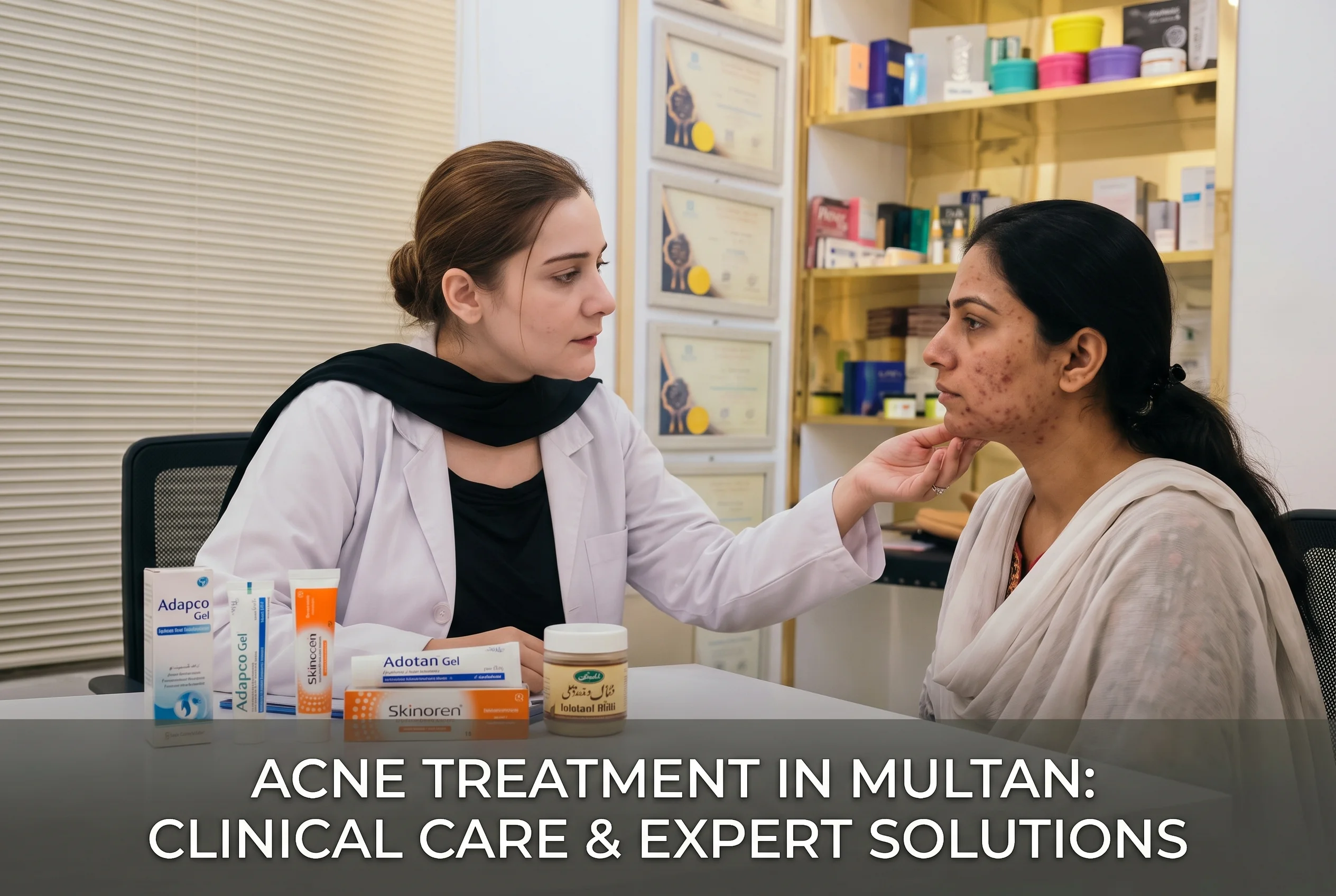
- Adapalene 0.1%: First-line for adult acne; gentler than classic tretinoin with anti-inflammatory activity.
Pakistani Pharmacy Brands: Adapco Gel (Pharmatec), Differin Gel/Cream (Galderma, imported), Adapal Gel. - Tretinoin (0.025%, 0.05%): Potent, highly effective, but higher incidence of erythema and peeling.
Pakistani Pharmacy Brands: Skin-A Cream (Stiefel/GSK), Retin-A (Janssen). - Adapalene + Benzoyl Peroxide Combinations: Synergistic powerhouse targeting both hyperkeratosis and bacterial counts.
Pakistani Pharmacy Brands: Adapco Plus Gel, Epiduo (Galderma).
B. Benzoyl Peroxide (BPO)
A bactericidal lipophilic agent that introduces oxygen into the follicle, destroying anaerobic C. acnes without creating antibiotic resistance.
- Pakistani Pharmacy Brands: Brevoxyl Cream (4%) (Stiefel/GSK), Benzac AC (2.5% or 5%) (Galderma), Pangel Gel.
- Clinical Note: 2.5% is as effective as 10% for mild-to-moderate inflammatory acne, but causes far less contact dermatitis and peeling. BPO will bleach colored towels and clothes.
C. Azelaic Acid (AzA 10% & 20%)
Azelaic acid offers four benefits: it is anti-bacterial, mildly comedolytic, anti-inflammatory, and an effective tyrosinase inhibitor (fading dark marks without bleaching normal skin).
- Pakistani Pharmacy Brands: Skinoren Cream 20% (Bayer), Aziderm Gel/Cream.
- Safety: Very well tolerated; considered category B for pregnancy (unlike retinoids, which are contraindicated).
D. Beta Hydroxy Acid (Salicylic Acid 1–2%)
Oil-soluble exfoliant that penetrates deep into sebum-filled follicles to dissolve cellular debris.
- Pakistani Pharmacy/Derm Brands: Acnex Bar/Wash, Salsic Face Wash, Neutrogena Oil-Free Acne Wash (Salicylic 2%), CosRx BHA Blackhead Power Liquid (select local retailers).
E. Clindamycin Topical (Antibiotic)
Warning: Monotherapy with topical antibiotics leads to resistant bacterial strains within weeks. Always pair topical clindamycin with Benzoyl Peroxide.
- Pakistani Brands: Dalacin T Solution/Lotion (Pfizer), Clinda Gel, or combination formulas like Duac Gel (Clindamycin 1% + BPO 5%).
6. Systemic Treatments: Oral Medications & Monitoring
Moderate-to-severe, recalcitrant, or scarring acne often fails to respond to topicals alone. Oral therapies work systemically, but require licensed medical supervision.
Prescription-Only Notice
The oral medications discussed below carry clear contraindications and side-effect profiles. Never self-prescribe or purchase these OTC without consultation and laboratory monitoring by a qualified PMDC/PMC-registered doctors.
You can Book Your Free consultation with GoldyZ Multan Aesthetics, Our Team of Aesthetic Physicians and Dermatologists is ready to guide you
A. Oral Antibiotics (Tetracycline Class)
Used for their systemic anti-inflammatory actions rather than purely killing bacteria.
- Doxycycline (50mg–100mg): (Brand: Vibramycin by Pfizer, Doxymed). Taken with plenty of water; must remain upright for 30 minutes to avoid pill-induced esophagitis. High risk of solar phototoxicity in Pakistani summers.
- Minocycline (50mg–100mg): (Brand: Minocin). Lower incidence of photosensitivity, but monitor for vestibular symptoms (dizziness) or rare drug-induced lupus.
- Treatment Window: Courses should be capped at 8 to 12 weeks to curb antimicrobial resistance.
B. Oral Isotretinoin (The Definitive Remission Agent)
A synthetic isomer of retinoic acid that temporarily shrinks sebaceous glands by up to 90%, normalizes follicular keratinization, and dramatically lowers C. acnes numbers.
- Pakistani Pharmacy Brands: Acトレ (Acnecut) (Atco), Roaccutane (Roche), Isotro.
- Dosing Strategies: Standard cumulative dosing (120–150 mg/kg) or low-dose daily maintenance regimens (10–20 mg/day) chosen to minimize mucocutaneous side effects.
- Mandatory Lab Work: Baseline and regular follow-up checks for Liver Function Tests (LFTs) and fasting Lipid Profiles (triglycerides, cholesterol).
- Strict Teratogenicity Alert: Isotretinoin causes severe fetal abnormalities. Women of childbearing potential must use two reliable forms of contraception (the iPLEDGE protocol) and avoid pregnancy during therapy and for at least one month after stopping.
C. Anti-Androgens
- Spironolactone (25mg to 100mg daily): An aldosterone receptor antagonist that blocks androgen receptors and inhibits 5-alpha reductase. Often very effective for deep hormonal jawline acne in adult females. (Brand: Aldactone by Searle). Requires monitoring of serum potassium and blood pressure.
- Combined Oral Contraceptives (COCs): Containing anti-androgenic progestins (e.g., Drospirenone + Ethinylestradiol, such as Yasmin). Suppresses ovarian androgen output.
7. The Hormonal & Metabolic Link: PCOS, Insulin Resistance & Diet
Polycystic Ovary Syndrome (PCOS) affects an estimated 20% to 50% of adult women in urban South Asian clinical cohorts. Its hallmark metabolic feature is systemic insulin resistance, which has a direct effect on the skin:
The Metabolic Domino Effect:
Insulin Resistance → Hyperinsulinemia → Decreased Hepatic Sex-Hormone Binding Globulin (SHBG) → Spike in Free Circulating Testosterone → Follicular Seborrhea + Hyperkeratinization → Cystic Acne FlareDietary Corrections for the Pakistani Context:
- Limit High-GI Refined Staples: Replace bakery biscuits, white buns, and surplus white basmati rice with whole-grain rotis (chakki atta), lentils (daals), and high-fiber vegetable curries (sabzi) prepared with minimal oil.
- Re-evaluate Skimmed and Sweetened Dairy: Commercial cow milk contains bovine growth factors and whey/casein fractions that can trigger the insulin-IGF-1 axis. If dairy flare-ups are consistent, consider scaling back sweetened lassi, doodh patti, or whey protein isolates.
- Targeted Supplements: Myo-Inositol (2000mg–4000mg/day) paired with D-Chiro Inositol has documented clinical value in restoring insulin sensitivity and calming hormonal breakouts in women with PCOS.
8. Climate-Specific Skincare Routines
Protocol A: Multani Summer & Monsoon (High Heat, Heavy Humidity)
Objective: Control excess sebum, resist fungal/bacterial proliferation, avoid pore congestion from heavy bases.
Morning (AM):
- Cleanse: Gentle foaming cleanser or low-percentage BHA wash (e.g., Acnex Cleanser or Cetaphil Oily Skin Cleanser).
- Treat: Skinoren 20% Cream (pea-sized amount applied over clean, dry skin to curb sebum and fight hyperpigmentation).
- Hydrate (If needed): Ultra-light gel-cream (e.g., Neutrogena Hydro Boost Water Gel or Dermive Oil-Free Moisturizer).
- Protect: Broad-spectrum non-comedogenic SPF 50 fluid (e.g., SpectraBAN 60 Gel, Neobrella Gel SPF 50, or U-Veil Forte Sunscreen Gel). Avoid heavy creams.
Evening (PM):
- Cleanse: Thorough wash to clear outdoor grime, smog deposits, and sunscreen residue.
- Retinoid Application: Pea-sized amount of Adapco Gel (Adapalene 0.1%) over the entire face. (Avoid immediate orbital/eyelid zones and the corners of the mouth).
- Moisturize: Light, non-pore-clogging lotion if skin feels tight.
Protocol B: Smoggy Winter in Multan (Cold, Dry Air, Elevated PM2.5)
Objective: Reinforce the stratum corneum barrier, neutralize pollutant free radicals, prevent retinoid-induced eczema.
Morning (AM):
- Cleanse: Non-foaming, barrier-sparing hydrator (e.g., Physiogel Calming Relief A.I. Cleanser or Cetaphil Gentle Skin Cleanser).
- Barrier Support: Ceramide-based hydrator (e.g., Dermive Sensitive Moisturizing Lotion or Physiogel Daily Moisture Cream).
- Protect: Hydrating chemical or mineral sunscreen (e.g., Solotan Sunblock or SpectraBAN Cream).
Evening (PM):
- Cleanse: Gentle wash to remove particulates and pollution residue.
- Sandwich Method for Retinoids:
• Step 1: Light layer of ceramide moisturizer.
• Step 2: Let dry for 10 minutes, then apply Skin-A (Tretinoin 0.025%) or Adapco Gel.
• Step 3: Seal with a second light layer of moisturizer. This curbs transepidermal water loss and limits winter retinization peeling.
9. Managing Post-Inflammatory Hyperpigmentation (PIH) in South Asian Skin (Fitzpatrick IV–V)
Pakistani skin falls largely into Fitzpatrick Phototypes IV and V. In deeper skin tones, melanocytes contain larger, more reactive melanosomes. When inflammation occurs around a follicle, these melanocytes produce surplus melanin, leading to stubborn brown or charcoal marks (PIH) that outlive the original pimple by months.
Multi-Pathway Depigmentation Strategy:
- Tyrosinase Inhibition: Use ingredients that slow the rate-limiting enzyme in melanin synthesis. Azelaic Acid 20% (Skinoren) and Alpha Arbutin (2%) are safe for continuous, long-term use in brown skin without the risk of paradoxical depigmentation.
- Melanin Transfer Inhibition: Niacinamide (4% to 5%) stops melanosomes from transferring from melanocytes to nearby keratinocytes. (Avoid harsh 10%+ serums if skin is sensitized).
- Accelerated Cellular Turnover: Nighttime topical retinoids (Adapalene/Tretinoin) gently exfoliate pigmented layers, lifting dark spots faster.
- Strict Broad-Spectrum Sun Protection: Ultraviolet A (UVA) and visible blue light reactivate melanosomes instantly. Skip sunscreen, and every PIH-fading active in your routine loses its efficacy. In sunny areas, tinted sunscreens with Iron Oxides provide helpful protection against visible high-energy light.
10. Fatal Desi Skincare Mistakes
A. The “Faiza / Whitening / Golden Pearl” Steroid Epidemic
The most damaging skin crisis in Pakistan is the use of unregulated local “whitening creams” or unprescribed superpotent steroid tubes (e.g., Betnovate, Dermovate, Clobetasol (clobevate cream), Polyfax) applied to breakouts. Steroids temporarily suppress inflammation through vasoconstriction, giving a misleading impression of “curing” the spot in 48 hours. Soon after, they trigger severe Topical Steroid-Induced Rosacea-Like Dermatitis (TSID), marked by follicular atrophy, telangiectasia (visible broken capillaries), rebound inflammatory papules, and hypertrichosis (abnormal facial hair growth).
Even the Multani Mitti (Fuller’s Earth) can trigger Acne breakouts indirectly if used incorrectly or on the wrong skin type.
B. Kitchen Hacks (Totkay) That Damage Skin Barriers
- Lemon Juice (Citrus Limon): Highly acidic (pH ~2.0), lemon juice disrupts the skin’s acid mantle, causing chemical irritations and severe phytophotodermatitis when exposed to South Asian sun.
- Toothpaste (Colgate on Pimples): Contains sodium lauryl sulfate, baking soda, alcohol, and hydrogen peroxide, triggering chemical burns and leaving behind deep post-inflammatory hyperpigmentation.
- Undiluted Apple Cider Vinegar (ACV): Often causes direct contact dermatitis and erosions on compromised facial skin.
C. Mechanical Trauma (Face Towel Rubbing & Manual Extraction)
Rubbing irritated skin with coarse bath towels, or picking and squeezing cystic bumps at home ruptures follicular walls internally. This spreads pathogenic bacteria and cellular debris deeper into the dermis, turning a manageable pustule into an infected nodule and increasing the likelihood of permanent scarring.