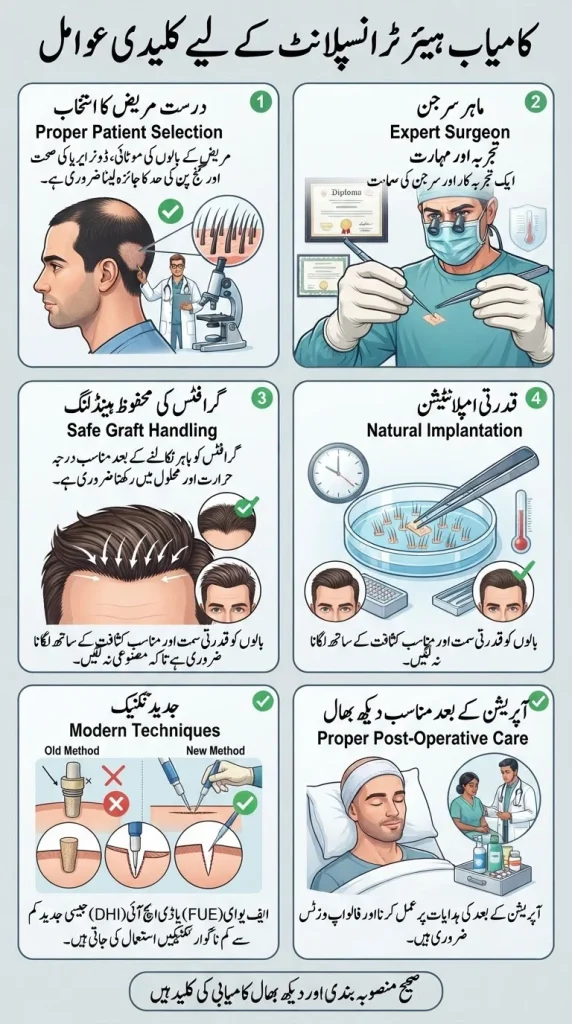
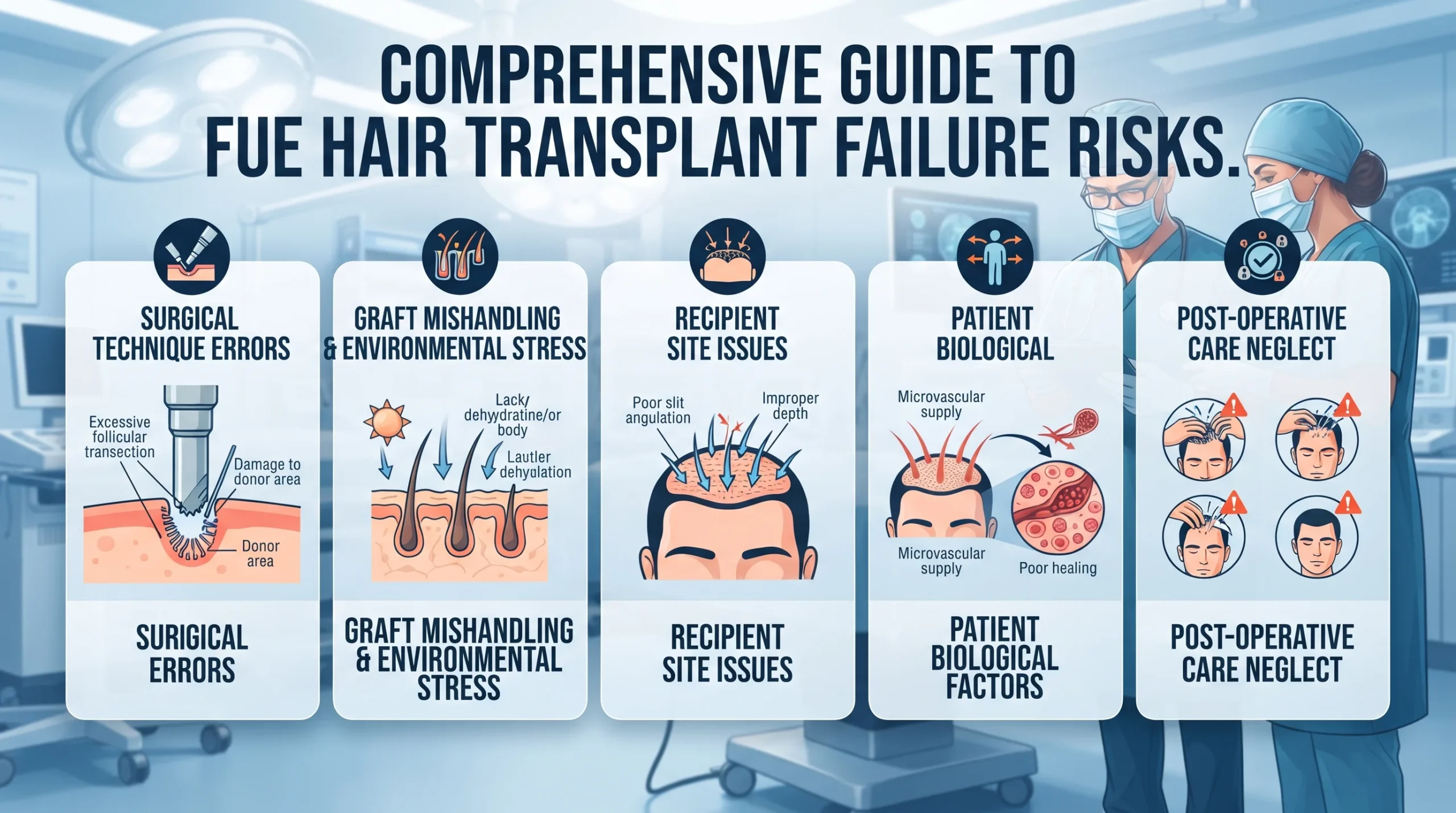

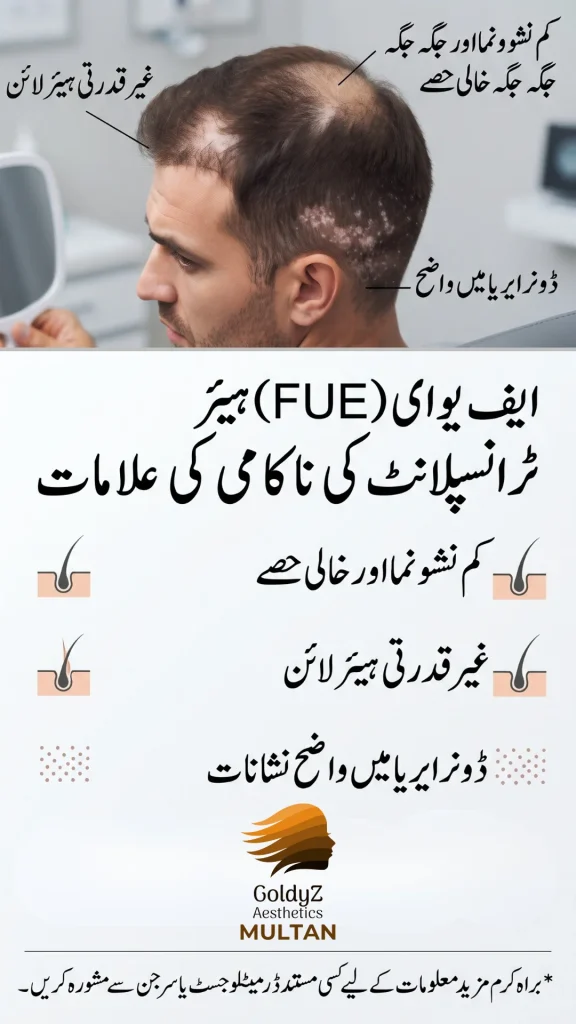
While Follicular Unit Extraction (FUE) boasts high success rates when performed meticulously, failures and suboptimal aesthetic outcomes still occur. A failed hair transplant typically presents as poor graft survival (low density/patchiness), unnatural hairline design, or severe donor site depletion and scarring.
1. Surgical Technique & Practitioner Errors
- Transection and Graft Damage: During extraction, if the micro-punch is misaligned with the hair follicle’s exit angle beneath the skin, it can slice the bulb or stem cells. Severely transected grafts will not grow.
- Over-Harvesting (Donor Depletion): Extracting too many grafts from the permanent donor zone (occipital and parietal scalp) without respecting safe harvesting ratios leads to a “moth-eaten” or visibly thinned donor region.
- Inappropriate Punch Size or Depth: Using an oversized punch increases scarring risk (hypopigmented white dots), while excessive depth can damage deeper neurovascular structures or cause subcutaneous tethering.
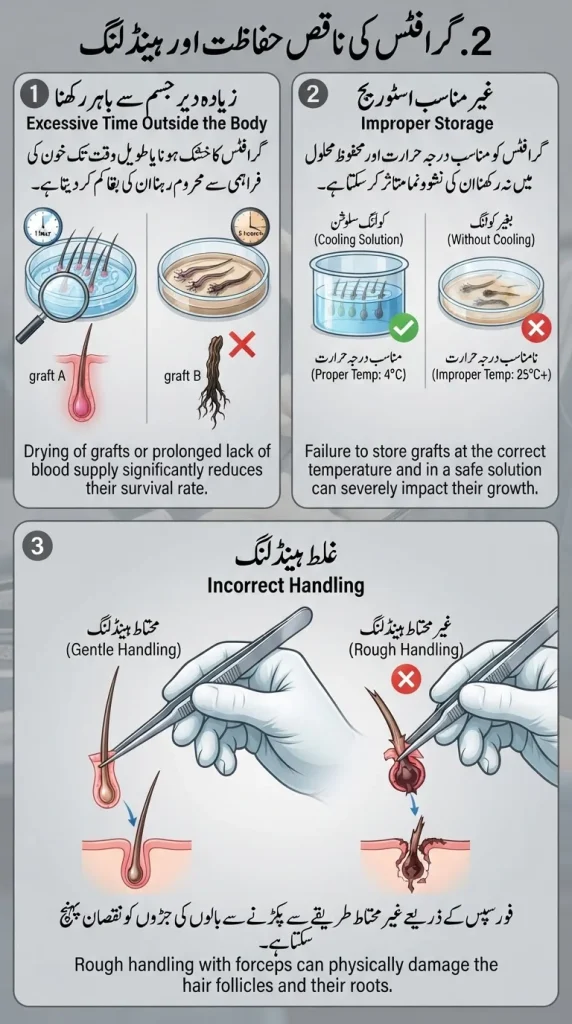
2. Graft Mishandling & Environmental Stress
- Prolonged Ex Vivo Time (Dehydration): Grafts left outside the body too long or allowed to dry out suffer ischemic injury. Once out of the blood supply, follicular units begin dying rapidly.
- Inadequate Storage Solution: Storing grafts in sub-optimal solutions (like normal saline instead of chilled, nutrient-rich hypothermic holding solutions like Custodiol or PRP-enriched media) reduces cellular viability.
- Rough Physical Manipulation: Forceful handling with blunt forceps damages the delicate outer root sheath and dermal papilla.
3. Recipient Site Issues & Implantation Flaws
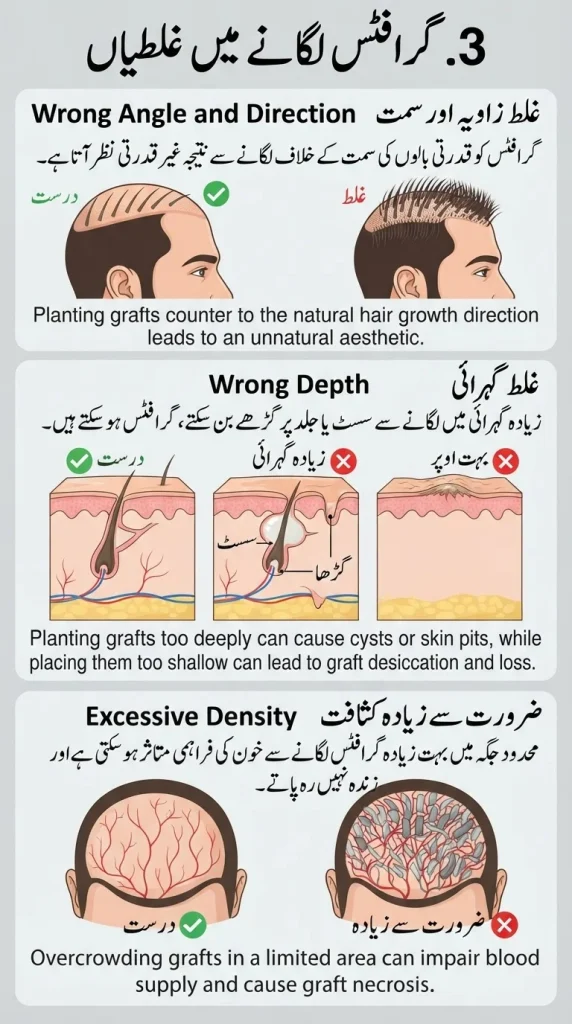
- Poor Angulation and Direction: If recipient slits are cut at the wrong angle or depth, the newly grown hairs will point awkwardly (e.g., straight up or lying completely flat), creating an unnatural, unmanageable look.
- Inappropriate Depth: Grafts placed too deep can become trapped beneath the epidermis (forming inclusion cysts or pitting), while grafts placed too shallow (“serializers” or “popped” grafts) sit above the skin surface, drying out and failing.
- High Graft Density Trauma: Forcing too many grafts into too small an area compromises local blood supply, leading to mass ischemic necrosis where whole patches of grafts fail to take.
4. Patient Biological & Physiological Factors
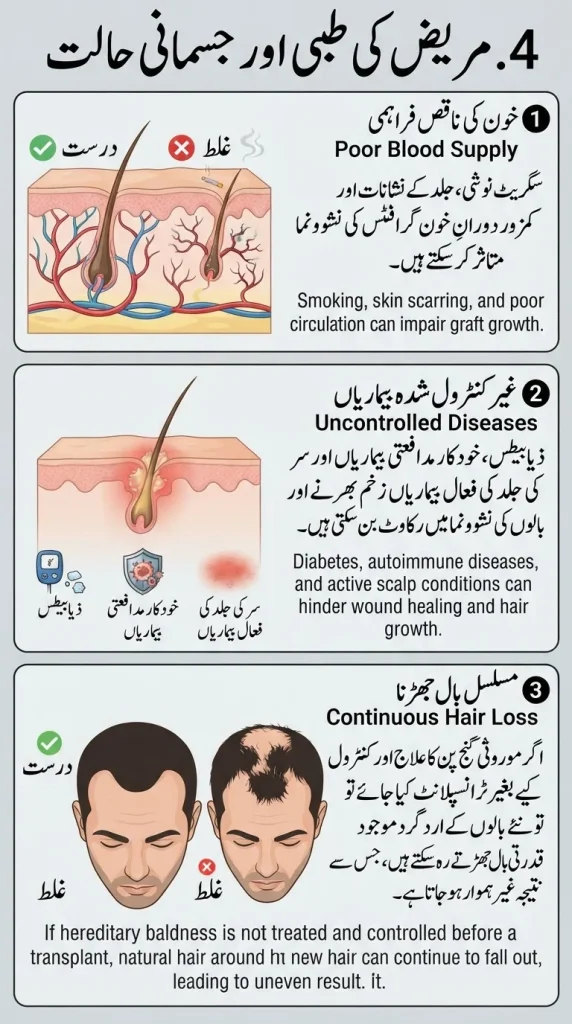
- Poor Blood Supply: Pre-existing conditions (e.g., severe localized scarring, compromised microvascular circulation from smoking) reduce oxygen delivery to recipient sites.
- Uncontrolled Underlying Medical Conditions: Unmanaged autoimmune disorders (like Alopecia Areata), uncontrolled diabetes impairing wound healing, or severe active scalp dermatoses (such as seborrheic dermatitis or psoriasis).
- Aggressive Progressive Hair Loss: Patients with aggressive, early-onset androgenetic alopecia who undergo transplantation without stabilization via medical therapy (e.g., 5-alpha-reductase inhibitors) continue to lose native hair surrounding the transplanted islands, resulting in an unnatural patchy appearance.
5. Post-Operative Care Neglect
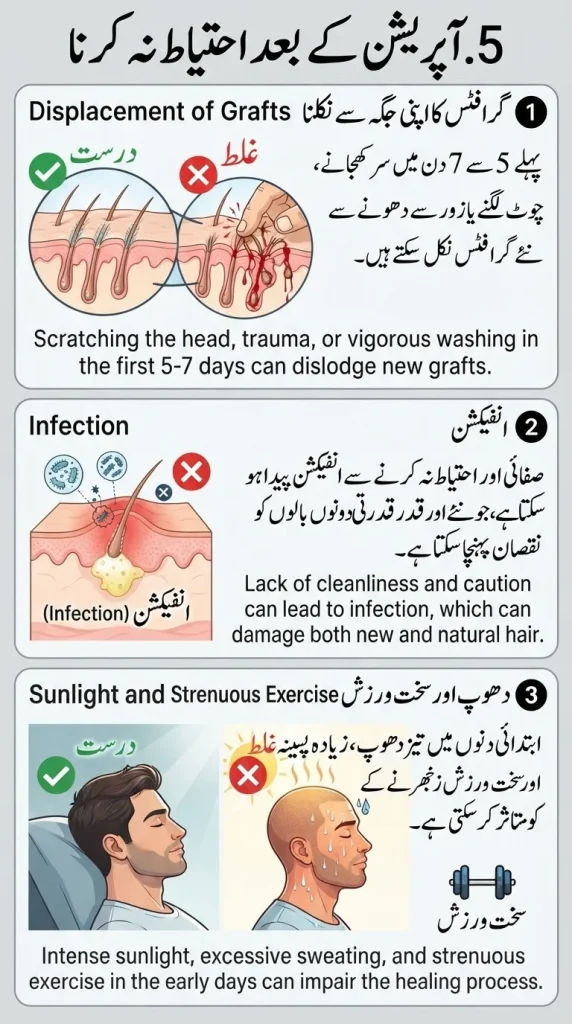
- Premature Graft Dislodgement: Scratching, bumping the head, or washing too aggressively during the first 5 to 7 days can dislodge newly anchored grafts.
- Infection: Failure to maintain sterile post-op hygiene can lead to folliculitis, cellulitis, or localized abscesses that destroy both transplanted and native follicles.
- Premature Sun Exposure or Heavy Exertion: Exposing fresh recipient sites to intense UV radiation or raising blood pressure/sweating excessively too early can compromise vascularization and healing.
Restore Your Confidence with Precision Hair Restoration at GoldyZ | Hair Transplantation Clinic
Don’t let preventable procedural errors or subpar techniques stand between you and a natural, permanent hairline. As Multan’s premier ISO 9001 certified and IPAM recognized aesthetic medical practice, our dedicated hair restoration division combines advanced surgical expertise with rigorous preservation protocols to guarantee optimal graft survival and aesthetic harmony. Take the first step toward a permanent, flawless result, schedule your expert consultation with our specialists at GoldyZ Multan Aesthetics today.