
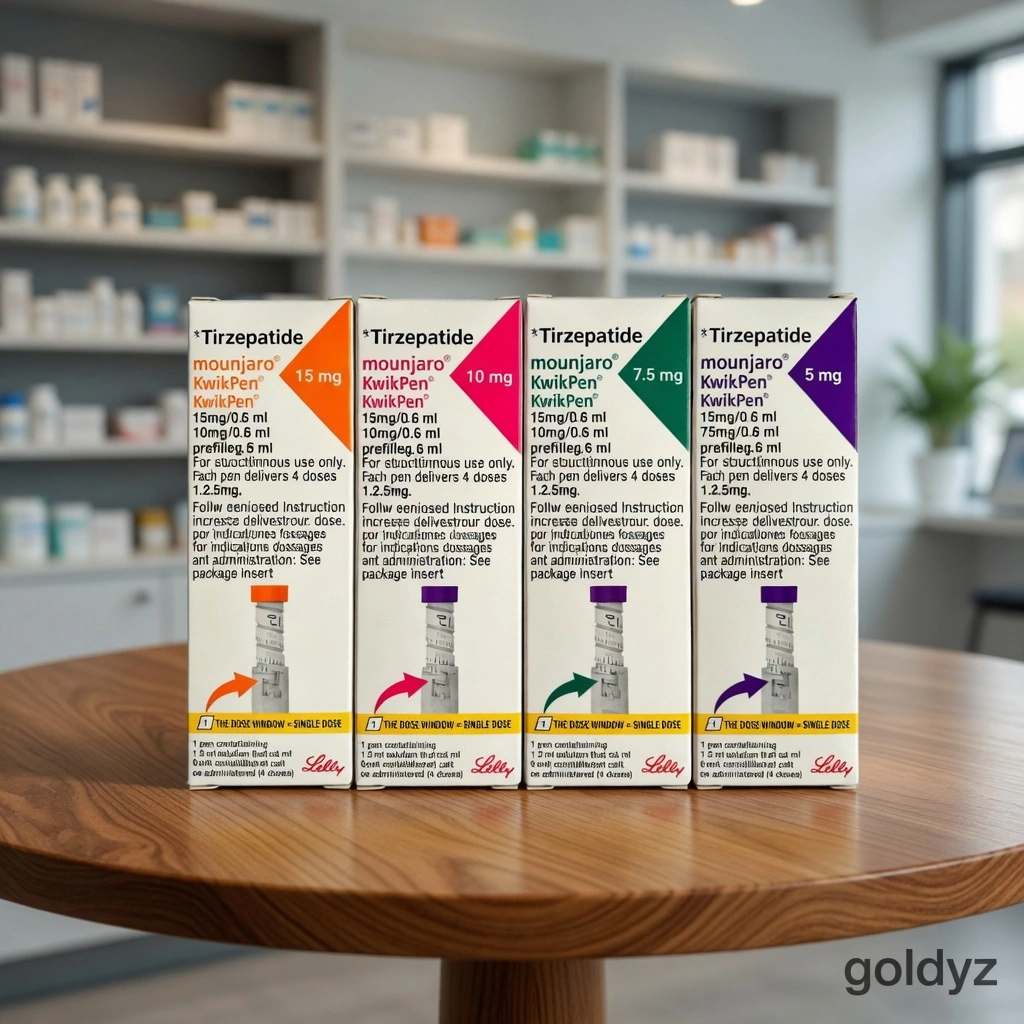
Mounjaro® KwikPen® pre-filled pen | Weight Loss Management
Price range: ₨ 110,000 through ₨ 150,000
Mounjaro (tirzepatide) is a once-weekly injectable prescription medication designed to improve blood sugar control in adults and children 10 years and older with type 2 diabetes. As a dual GIP and GLP-1 receptor agonist, it works with diet and exercise to lower A1C levels effectively. Many users also experience significant weight loss as a secondary benefit. Available in pre-filled single-dose pens for easy self-administration.
Prescription required. Consult your healthcare provider before use.
👉 🟢 Message our Doctors on WhatsApp


Mounjaro® (tirzepatide) is an innovative, once-weekly injectable medication that represents a breakthrough in managing type 2 diabetes. As the first and only dual glucose-dependent insulinotropic polypeptide (GIP) and glucagon-like peptide-1 (GLP-1) receptor agonist approved for this purpose, Mounjaro works in multiple ways to help regulate blood sugar levels more effectively than traditional treatments.
How Mounjaro Works:
- Stimulates insulin release when blood sugar is high
- Reduces glucagon production by the liver
- Slows gastric emptying to prevent sharp blood sugar spikes after meals
- Promotes a feeling of fullness, which can support healthy weight management
Key Benefits:
- Significant A1C Reduction: Clinically proven to lower HbA1c levels when used alongside diet and exercise
- Weight Loss Support: Many patients experience meaningful weight reduction, making it a preferred choice for those managing both diabetes and weight concerns
- Convenient Dosing: Once-weekly subcutaneous injection with flexible timing
- Available Strengths: 2.5 mg, 5 mg, 7.5 mg, 10 mg, 12.5 mg, and 15 mg pre-filled pens
Usage & Administration: Mounjaro is administered once per week at any time of day, with or without food. The typical starting dose is 2.5 mg, gradually increased as needed under medical supervision up to a maximum of 15 mg for adults (10 mg for pediatric patients 10+). It can be injected into the abdomen, thigh, or upper arm.
Important Safety Information: Mounjaro carries a boxed warning for the risk of thyroid C-cell tumors (observed in animal studies). It is not recommended for people with a personal or family history of medullary thyroid carcinoma or Multiple Endocrine Neoplasia syndrome type 2. Common side effects include nausea, diarrhea, vomiting, constipation, decreased appetite, and abdominal pain. These often improve over time as the body adjusts.
Who Should Use Mounjaro? Mounjaro is indicated as an adjunct to diet and exercise to improve glycemic control in adults and children 10 years of age and older with type 2 diabetes mellitus. It is a prescription-only medication.
Always consult with your healthcare provider to determine if Mounjaro is right for you. Individual results may vary.
This product requires a valid prescription. Not for use in type 1 diabetes or diabetic ketoacidosis.
Additional information
| Strength | 2.5 mg, 5 mg, 7.5 mg, 10 mg, 15 mg |
|---|
1 review for Mounjaro® KwikPen® pre-filled pen | Weight Loss Management
Related products
-
Sale!

Tirzee Injection | Weight Management Support
Price range: ₨ 3,300 through ₨ 8,400Select options This product has multiple variants. The options may be chosen on the product page -
Sale!
TirzaTrim Injection (Tirzepatide) Multi-Dose Pre-Filled Pen | 5mg, 10mg & 15mg
Price range: ₨ 13,000 through ₨ 23,000Select options This product has multiple variants. The options may be chosen on the product page -
Sale!
Meptide Tirzepatide 2.5mg–10mg | Mass Pharma | GoldyZ Multan Aesthetics
Price range: ₨ 3,000 through ₨ 6,400Select options This product has multiple variants. The options may be chosen on the product page -
Sale!

Zeptide 10mg Injection (Ferozsons) – 0.5ml Prefilled Syringe
Price range: ₨ 2,500 through ₨ 5,500Select options This product has multiple variants. The options may be chosen on the product page
Dr. Alina Rameez, MD –
By Dr. Alina Rameez, MD, Endocrinologist
Board-Certified in Endocrinology, Diabetes & Metabolism
With over 18 years of clinical experience in metabolic disorders
As an endocrinologist specializing in type 2 diabetes and obesity management, I have followed the development and real-world application of tirzepatide (Mounjaro) closely since its approval. This dual GIP and GLP-1 receptor agonist represents a significant advancement over single-agonist therapies. Below is a detailed, evidence-based review focusing on its strengths across all available doses.
Mechanism of Action
Mounjaro mimics two key incretin hormones: glucose-dependent insulinotropic polypeptide (GIP) and glucagon-like peptide-1 (GLP-1). This dual action:
Enhances insulin secretion in a glucose-dependent manner
Suppresses glucagon release
Slows gastric emptying
Reduces appetite and food intake via central nervous system pathways
This multifaceted approach results in superior glycemic control and weight loss compared to GLP-1 agonists alone (e.g., semaglutide).
Dosing and Titration
Mounjaro is administered as a once-weekly subcutaneous injection via single-dose pre-filled pens. Available strengths: 2.5 mg, 5 mg, 7.5 mg, 10 mg, 12.5 mg, and 15 mg.
Recommended titration (to minimize gastrointestinal side effects):
Start: 2.5 mg weekly (initiation dose – not for glycemic control)
After 4 weeks: Increase to 5 mg
Subsequent increases: 2.5 mg increments every 4 weeks as needed
Maximum: 15 mg weekly for adults; 10 mg for children ≥10 years
Strengths by Dose – Clinical Efficacy
2.5 mg (Initiation Dose)
Primarily for tolerability. Provides modest early benefits in appetite suppression and mild glycemic improvement. Not intended as a maintenance dose. Useful for assessing patient tolerance before escalation.
5 mg (Lowest Maintenance Dose)
A1C Reduction: Approximately 1.8–2.1% from baseline (SURPASS trials).
Weight Loss: ~7–8 kg (15–17 lbs) or 8–16% body weight reduction in obesity trials.
Strengths: Excellent starting therapeutic dose. High percentage of patients achieve A1C <7%. Good balance of efficacy and tolerability. Many patients see meaningful results here without needing higher doses.
7.5 mg
Bridges the gap between low and high doses.
Offers improved A1C reduction (typically 2.0–2.3%) and weight loss compared to 5 mg.
Ideal for patients needing more control but sensitive to side effects at higher doses.
10 mg
A1C Reduction: Often 2.1–2.4%.
Weight Loss: ~10–15 kg or ~19–21% body weight in key trials.
Strengths: Strong efficacy with a favorable response rate. Many patients reach A1C targets (<6.5% or even <5.7% in some cases). Substantial cardiometabolic benefits (improved lipids, blood pressure).
12.5 mg
Incremental step toward maximum effect.
Further dose-dependent improvements in glycemic control and satiety.
15 mg (Highest Dose)
A1C Reduction: Up to 2.3–2.5% (superior to semaglutide 1 mg in head-to-head trials).
Weight Loss: Average 12–15+ kg (27+ lbs) in diabetes trials; up to 20–22.5% body weight reduction in obesity studies (SURMOUNT).
Strengths: Maximum efficacy. Highest rates of patients achieving normal-range A1C and clinically significant weight loss (≥15–20%). Particularly beneficial for patients with higher baseline A1C or severe obesity.
Overall Glycemic and Weight Benefits
Across SURPASS trials, tirzepatide outperformed placebo, insulin glargine/degludec, and semaglutide in A1C reduction and weight loss at every dose level. Up to 90% of patients reach A1C <7%. Weight loss is dose-dependent and often superior to other incretin therapies.
Additional benefits include improvements in cardiovascular risk factors, liver fat, and quality of life.
Safety Profile and Side Effects
Gastrointestinal side effects (nausea, diarrhea, vomiting, constipation) are most common, especially during titration, and are generally mild-to-moderate, decreasing over time. Higher doses carry slightly higher GI risk, but slow titration mitigates this.
Boxed Warning: Risk of thyroid C-cell tumors (based on rodent studies) – contraindicated in patients with personal/family history of medullary thyroid carcinoma or MEN 2.
Other considerations: Rare risks of pancreatitis, gallbladder issues, and hypoglycemia (when combined with insulin/sulfonylureas). Monitor for dehydration and renal function.
Who Benefits Most?
Mounjaro is ideal for adults (and children ≥10) with type 2 diabetes inadequately controlled by diet/exercise ± other medications. It shines in patients with obesity or those seeking dual glycemic and weight management.
Final Clinical Opinion
Mounjaro is one of the most effective tools currently available for type 2 diabetes and weight management. Its dose flexibility allows personalized treatment – many patients achieve excellent results at 5–10 mg, while others benefit from escalation to 15 mg. The dual agonist mechanism provides robust, dose-dependent benefits that often surpass previous standards of care.
Individual results vary. A thorough medical evaluation, lifestyle counseling, and ongoing monitoring are essential. This medication is a powerful adjunct to – not a replacement for – healthy diet and exercise.
Patients should consult their healthcare provider for personalized advice. This review is for educational purposes based on clinical trial data and experience.