
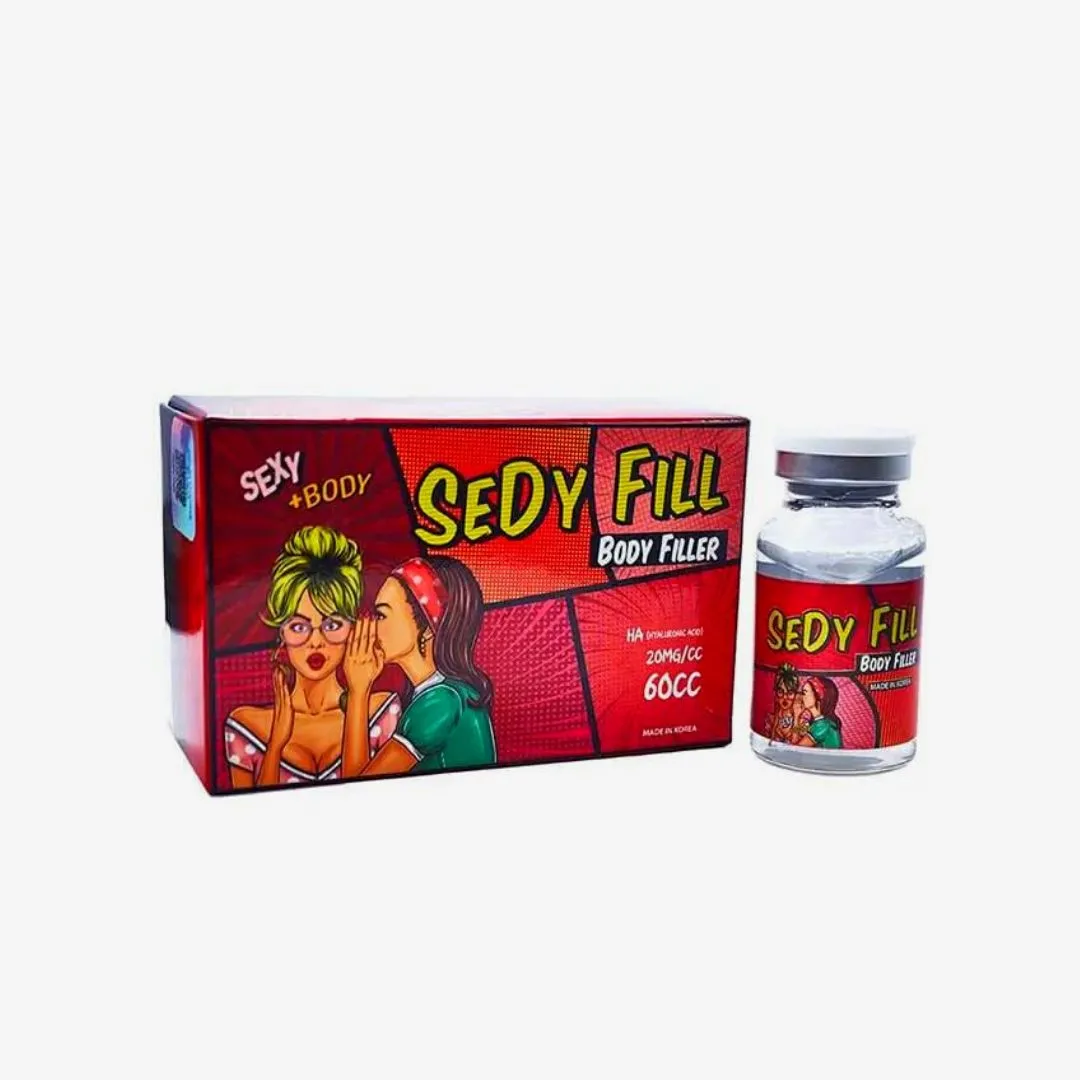
Sedy Fill Body Filler 60cc
₨ 50,000
Sedy Fill Body Filler 60cc is a high-volume cross-linked hyaluronic acid filler designed for body contouring, volume enhancement, and correction of soft tissue deficiencies. Ideal for aesthetic treatments requiring substantial volumization and shaping.
👉 🟢 Message our Doctors on WhatsApp


Sedy Fill Body Filler 60cc is a professional-grade hyaluronic acid body filler formulated for non-surgical body contouring and volume restoration. Its highly cross-linked HA structure provides durability, stability, and excellent tissue integration, making it suitable for enhancing body contours and addressing volume deficiencies in various treatment areas.
The large 60cc presentation is designed for practitioners seeking significant volumizing capacity in a single treatment session. The filler offers smooth distribution within tissues while helping create natural-looking contours and improved symmetry.
Sedy Fill Body Filler is commonly used for aesthetic body enhancement procedures where additional volume, contour refinement, and soft tissue support are desired.
Key Features
- High-volume 60cc hyaluronic acid filler
- Advanced cross-linked HA technology
- Designed for body contouring and volumization
- Smooth tissue integration
- Long-lasting aesthetic support
- Suitable for correcting soft tissue volume deficiencies
- Professional-use aesthetic product
Product Specifications
- Product Type: Hyaluronic Acid Body Filler
- Volume: 60cc
- Composition: Cross-Linked Hyaluronic Acid
- Application: Body Contouring and Volume Enhancement
- Use: Professional Aesthetic Procedures
Storage
Store according to the manufacturer’s instructions in a cool, dry place away from direct sunlight. For professional use only.
1 review for Sedy Fill Body Filler 60cc
Related products
-
-
Caratfill (Sub-Q, KISS, DEEP) – Dermal Fillers
Price range: ₨ 11,500 through ₨ 12,500Select options This product has multiple variants. The options may be chosen on the product page -
Sale!
AMI Eyes Polynucleotide
Original price was: ₨ 13,500.₨ 11,500Current price is: ₨ 11,500. -
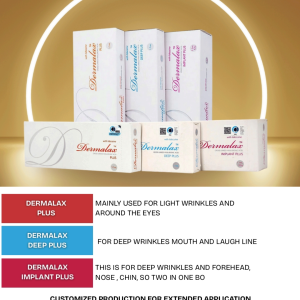
Dermalax Cross-Linked Hyaluronic Acid Dermal Filler
₨ 12,500Select options This product has multiple variants. The options may be chosen on the product page
Dr. Zeshan Ahmed (Chief Aesthetic Physician at GoldyZ) –
Sedy Fill is a hyaluronic acid (HA)-based body filler developed for non-surgical volume restoration and contouring in larger anatomical areas. Manufactured by Maypharm in South Korea, it utilizes a proprietary cross-linking technology (HENM) to create a highly moldable, high-viscosity gel suitable for buttocks, hips, breasts, and other body regions. As a surgeon performing both surgical and non-surgical body procedures, I consider products like Sedy Fill part of the evolving landscape of injectable body augmentation. While they offer convenience and reversibility compared to permanent implants or fat grafting, they carry specific considerations related to volume, longevity, and potential complications.
This review provides an evidence-informed, balanced overview based on product specifications, clinical use patterns, and general data on cross-linked HA fillers in body applications.
– Composition and Technology
Sedy Fill consists of 100% cross-linked, non-animal hyaluronic acid produced through bacterial fermentation and stabilized using the manufacturer’s HENM (High-Efficiency Nano Mesh) cross-linking technology.
Key characteristics include:
– HA concentration typically in the range of 20–24 mg/mL
– High viscosity and cohesivity designed for structural support in body tissues
– Semi-solid gel consistency that allows good moldability during injection
– Low endotoxin levels as claimed by the manufacturer
– Hydrophilic properties that support volume retention through water absorption
The technology aims to create a stable particle structure while maintaining the ability to be dissolved with hyaluronidase if clinically necessary.
– Indications
Sedy Fill is indicated for non-surgical correction and enhancement of body contours, including:
– Buttock volume augmentation and projection (non-surgical BBL alternative)
– Hip dip correction and hip widening
– Breast volume enhancement or asymmetry correction (in selected cases)
– Calf contouring
– Other areas requiring significant volume restoration (e.g., post-weight loss or post-pregnancy contour defects)
It is best suited for patients seeking moderate volume increase with a natural feel and the option of reversibility.
– Mechanism of Action
Once injected into the subcutaneous or suprafascial plane, the cross-linked HA gel provides immediate volume through its space-occupying effect. Over time, the hydrophilic nature of HA attracts and retains water, contributing to sustained volume. The high cohesivity and cross-linking density are intended to resist migration and deformation under mechanical stress in mobile body areas.
Unlike facial fillers, body formulations like Sedy Fill are engineered with higher G-prime (stiffness) to provide structural support against gravity and movement.
– Treatment Protocol
A typical treatment involves:
– Thorough patient assessment, including marking of target areas and discussion of realistic expectations.
– Use of large-volume syringes (commonly 60 mL or 80 mL total per session, sometimes administered in stages).
– Injection using blunt cannulas (preferred for safety in large areas) under sterile conditions, often with local anesthesia or sedation.
– Layered or fanning technique to achieve even distribution and natural contouring.
– Multiple sessions may be recommended (2–3 sessions spaced 4–8 weeks apart) for optimal and safer volume buildup.
– Post-treatment massage and compression garments are frequently advised.
Treatment should only be performed by experienced practitioners with advanced training in large-volume filler techniques and complication management.
– Expected Results and Longevity
Patients typically see immediate improvement in volume and shape. Final results become more apparent after swelling subsides (usually within 2–4 weeks).
Reported duration varies widely:
– Most sources cite 6–12 months of noticeable effect.
– Some clinical observations suggest up to 12–18 months in certain patients and areas, influenced by metabolism, lifestyle, injection depth/volume, and product characteristics.
– Maintenance treatments are generally required to sustain results.
Individual factors such as physical activity level, weight fluctuations, and metabolic rate significantly affect longevity.
– Safety Profile and Risks
Sedy Fill is promoted as having a good safety profile due to its pure HA composition and reversibility. However, like all large-volume body fillers, it carries important risks that must be clearly communicated.
Common transient effects:
– Swelling, bruising, and tenderness (can last 1–3 weeks in body areas)
– Temporary firmness or lumpiness that usually softens with time and massage
Potential complications (higher risk with large volumes):
– Migration or displacement of the filler
– Asymmetry or irregular contour
– Nodules or granuloma formation
– Infection (rare but serious if it occurs)
– Vascular compromise (though less common than in facial injections)
– Delayed inflammatory reactions
One independent analysis raised concerns about potential styrene monomer release during degradation and temperature-related changes in viscosity, which could affect product stability. These findings warrant caution and highlight the importance of using authentic, properly stored products from reputable suppliers.
Because large volumes are often used, reversal with hyaluronidase can be more challenging and expensive than with facial treatments. Surgical removal may occasionally be required in complicated cases.
Contraindications include active infection, autoimmune disease flares, pregnancy/breastfeeding, unrealistic expectations, and previous adverse reactions to HA fillers.
– Advantages and Limitations
Advantages:
– Immediate results with no general anesthesia or surgical incisions
– Moldable consistency allows good intraoperative shaping
– Reversibility (in principle) with hyaluronidase
– No donor site morbidity (unlike fat grafting)
– Suitable for patients who are not candidates for or do not want surgery
Limitations:
– Temporary results requiring ongoing maintenance
– Higher cost for large volumes compared to some surgical options over time
– Risk of migration and contour irregularities in high-movement areas
– Limited long-term independent clinical data specifically on this brand for body use
– Not appropriate for patients seeking very large or permanent volume changes (surgery or fat transfer may be superior)
– Clinical Verdict
Sedy Fill represents one of several cross-linked HA body filler options available for non-surgical contouring. Its HENM technology provides good moldability and structural properties that can deliver natural-looking volume enhancement when used judiciously by skilled injectors.
It is a reasonable consideration for patients seeking moderate, reversible body enhancement with minimal downtime. However, it is not without risks, and outcomes are highly technique-dependent. In my practice, I reserve large-volume body fillers for carefully selected patients after thorough discussion of alternatives (including surgical options and autologous fat transfer). Proper patient selection, realistic expectations, and expertise in complication management are essential.
Overall, while convenient, these treatments should be approached with the same rigor as any other aesthetic procedure involving significant volume.